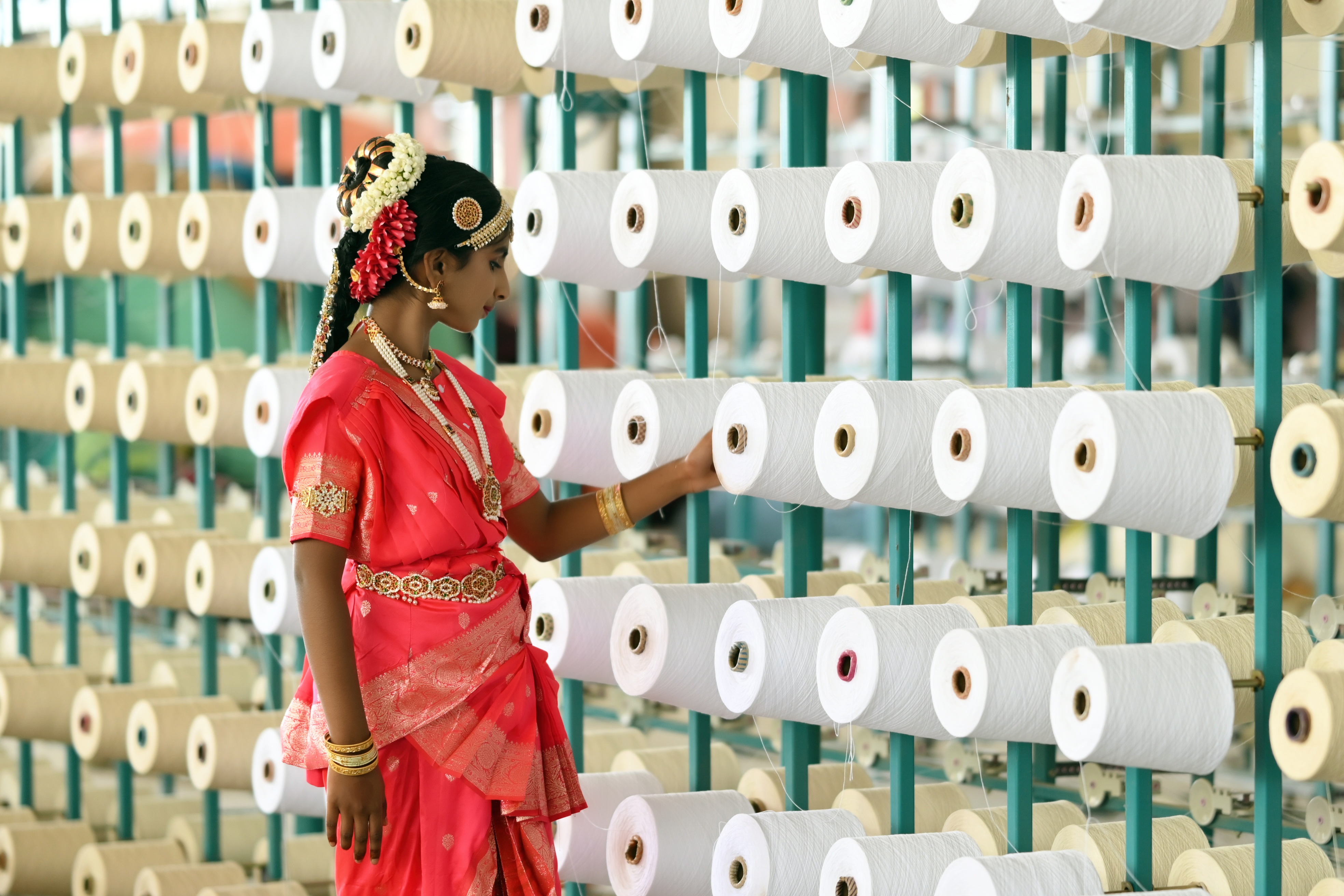
Three categories.
One standard of excellence.
From plush hotel bath suites to beach resorts and professional kitchens — every Sunsetcoast Textile towel is crafted in 100% combed cotton.
Bath Towels
Full bath collections for luxury hotels, hospitality and retail private label. 350–700 GSM spa-grade.
Beach Towels
Bold, vibrant resort and retail beach towels in velour, yarn-dyed and printed constructions.
Kitchen Towels
High-performance kitchen towels for hospitality and food service. Maximum absorbency and durability.
Built for brands. Trusted by hospitality.
Two distinct but equally demanding markets — served with the same rigour and end-to-end service.
Retail & Consumer Brands
Global retail brands, importers and private label buyers who need consistent quality and flexible MOQs.
- Full private label — your brand, our manufacturing
- Custom labels, embroidery & jacquard
- Retail-ready packaging & compliance
- Development orders from 500 pcs
Hotels & Hospitality
Five-star hotels, resort chains and F&B groups demanding durability and consistent bulk supply.
- Bath, pool, spa & kitchen programmes
- Bulk supply with property-specific labeling
- 500–600 GSM plush bath collections
- Ongoing replenishment programmes
Made in India.
Delivered everywhere.
From India's textile heartland to retail shelves and hotel linen stores across every continent.
What we do,
exceptionally well.
Modern machinery, skilled weavers, rigorous QC and end-to-end private label service.
Terry Weaving
Loop terry, velour, flat-woven, zero-twist and jacquard in 100% combed cotton.
Dobby & Jacquard
Woven borders, stripe patterns and full-width jacquard logo integration.
Private Label & OEM
Design to branded retail packaging — labels, embroidery, barcodes.
Quality Control
GSM, shrinkage, colourfastness, absorbency, pH. Lab reports every shipment.
Dyeing & Finishing
Reactive dyeing for colourfastness. Sanforised finishing for controlled shrinkage.
Export Logistics
Sea and air freight worldwide. Full documentation for customs clearance.
Better textiles.
Better world.
Every decision — from cotton sourcing to packaging — shaped by responsibility.
Responsible Cotton
Traceable cotton from partner mills with water-efficient practices.
Water-Conscious Dyeing
Efficient reactive dyeing. Partners investing in effluent treatment.
Reduced Plastic Packaging
Recycled materials. Eliminating single-use packaging across all ranges.
Ethical Factory Standards
Safe conditions, fair wages. Regular audits and long-term partnerships.
Quality you can count on.
Our testing protocols exceed standard requirements — every shipment matches the last.
From the loom floor to your brand.
Technical knowledge, buyer guidance and manufacturing transparency — from the people who actually weave your towels.
Understanding GSM: The Definitive Towel Weight Guide for Buyers
GSM — grams per square meter — is the single most important specification when sourcing towels. It governs feel, absorbency, durability and price. Here is what every brand buyer and hotelier needs to know before placing an order.
What GSM Actually Measures
GSM stands for grams per square meter. It is the universal metric for fabric density in towel manufacturing. A 10cm × 10cm sample is cut, weighed on a lab-grade scale, and the result is multiplied to express the weight of one square metre of fabric. At Sunsetcoast Textile, every production run is GSM-tested at multiple points — incoming greige, post-dye, and pre-shipment — to maintain consistency within the industry standard tolerance of ±3%.
GSM is not thread count. Thread count matters for bed linen, but towels are terry-woven with looped pile yarns that create three-dimensional absorbent surfaces. The density of those loops, combined with yarn quality and pile height, is what GSM captures in a single number.
GSM Tiers: What the Numbers Mean
300–400 GSM (Lightweight): Thin, fast-drying towels suited to gym facilities, airline amenity kits, kitchen environments and poolside service where rapid turnover matters more than plushness. We manufacture kitchen towels and lightweight pool towels in this range, using combed cotton for softness even at lower weights.
400–600 GSM (Medium to Heavy): This is the core hospitality and retail range. A 500 GSM bath towel strikes an ideal balance between absorbency, laundering efficiency and guest satisfaction. Most four-star hotel programmes sit between 450 and 550 GSM. Retail brands targeting the mid-premium market typically specify 500–600 GSM for their bath collections.
600–700 GSM (Luxury): Dense, plush and unmistakably premium. Five-star hotels, resort spas and premium retail brands specify towels in this range. The towel feels heavy in the hand, absorbs water rapidly and maintains its structure through hundreds of industrial wash cycles. At Sunsetcoast, our 650 GSM bath towels use 100% long-staple combed cotton with optimised pile height to deliver spa-grade softness without excessive drying time.
Why GSM Alone Does Not Tell the Full Story
Two towels can share the same GSM yet feel completely different. The variable is construction. A towel with a heavy base fabric and short pile loops will weigh the same per square metre as a towel with a lighter base and taller, denser loops — but the second towel will be softer, more absorbent and more luxurious. This is why we always discuss construction details alongside GSM: yarn count, pile height, loop density and weave structure all matter.
Cotton quality amplifies the effect. Combed cotton removes short, weak fibres before spinning, leaving only long-staple strands. The result is a smoother, stronger yarn that produces less lint, absorbs dye more evenly and feels noticeably softer against the skin. Every Sunsetcoast towel uses 100% combed cotton — we do not blend with polyester or use carded yarn in any product line.
Choosing the Right GSM for Your Market
If you are buying for a hotel, match GSM to your property's positioning and laundry capacity. A 450–500 GSM towel launders efficiently and satisfies most guests. Luxury properties should invest in 600+ GSM for bath towels while keeping hand towels and face cloths at 500–550 GSM for practical reasons.
For retail brands, GSM is a marketing asset. Communicating the GSM on your packaging and product pages builds buyer confidence and differentiates your product from competitors who hide specifications. We provide full lab reports with every shipment, including GSM verification, shrinkage data and colourfastness ratings — documentation your customers can trust.
Combed vs Carded Cotton: Why Yarn Quality Defines Towel Performance
Every premium towel starts with yarn selection. The difference between combed and carded cotton determines softness, lint, absorbency and longevity — yet most buyers never see behind the label.
The Combing Process
Cotton yarn production begins with raw cotton bales being opened, cleaned and carded — a mechanical process that aligns fibres into a loose rope called a sliver. At this stage, the sliver contains a mix of long and short fibres. Carded cotton stops here. The yarn is spun directly from this mixed-length sliver, producing a functional but rougher yarn with more protruding short fibres that shed as lint.
Combed cotton adds a critical extra step. The sliver passes through fine combs that mechanically remove the shortest fibres — typically 15–20% of the raw material. What remains are only the longest, strongest strands. When spun, these produce a yarn that is smoother, more uniform, stronger per unit of weight and significantly less prone to pilling or lint shedding.
Why Sunsetcoast Uses Combed Cotton Exclusively
From a manufacturer's perspective, combed cotton costs more — the combing step removes material and adds process time. But for the end product, the difference is decisive. A combed cotton towel absorbs dye more evenly, producing richer, more consistent colour across a production run. It feels softer on first use and maintains that softness through hundreds of wash cycles. And critically for hotels, it sheds dramatically less lint.
We specify combed cotton across every Sunsetcoast product line — bath, beach and kitchen. There is no exception. When a new buyer asks us to quote using carded yarn to reduce cost, we explain the trade-offs transparently. The few rupees saved per towel are always recouped through lower return rates, fewer complaints and stronger brand loyalty.
Staple Length: The Other Half of the Equation
Within combed cotton, staple length further determines performance. Short-staple cotton (below 25mm) produces ordinary yarns. Long-staple cotton (28mm+) creates finer, more lustrous yarns with superior tensile strength. Extra-long staple (ELS) cotton, such as Egyptian Giza or American Pima, pushes beyond 35mm and produces the silkiest hand-feel available.
Most Sunsetcoast towels use Indian Shankar-6 long-staple cotton, offering an excellent balance of quality and availability from domestic mills. For premium programmes requiring the highest specification, we source ELS grades. The key point: staple length and combing work together. A combed long-staple yarn will always outperform a carded short-staple yarn at the same GSM.
Reactive Dyeing for Towels: How Colour Becomes Permanent
Colour that survives 200 industrial washes does not happen by accident. Reactive dyes form covalent bonds with cellulose fibres, making them the gold standard for cotton terry.
What Makes Reactive Dyes Different
Most textile dyes sit on the surface of fibres held by physical attraction. Reactive dyes form covalent chemical bonds directly with the hydroxyl groups in cellulose. The dye molecule becomes part of the fibre itself, resulting in exceptional wet and dry colourfastness, resistance to chlorine bleach at moderate concentrations, and deep saturated shades that remain vibrant wash after wash.
A bath towel in a hospitality property may be washed 200–300 times during its service life. Reactive-dyed towels maintain colour integrity throughout, whereas towels dyed with cheaper direct or pigment processes fade noticeably within 20–30 cycles.
The Dyeing Sequence
At our partner dye houses in Solapur, the greige terry fabric is first scoured to remove natural waxes, oils and sizing agents. After scouring, the fabric enters the dye bath with controlled salt additions to drive dye molecules into the fibre, followed by alkali (soda ash) to trigger the covalent bonding reaction. Temperature, time, salt concentration and liquor ratio are all precisely controlled.
Post-dyeing, the fabric is thoroughly washed in multiple rinse cycles to remove unfixed dye. We specify a minimum of four rinse cycles with progressively reducing temperatures to ensure complete removal of hydrolysed dye — preventing bleed during the consumer's first washes.
Colour Matching and Consistency
Brands specify colour using Pantone TCX references. Translating a Pantone shade into a precise reactive dye recipe requires lab-scale trials, spectrophotometer readings and iterative adjustments. We produce lab dips for every new colour before bulk production, providing spectrophotometer data with a Delta E tolerance of ≤1.5.
We maintain recipe databases indexed by Pantone reference, cotton lot and GSM, ensuring repeat orders match previous shipments. For hotel programmes with quarterly replenishment, a guest should never notice a colour difference between towels purchased six months apart.
Private Label Towels: The Complete OEM Process from Design to Delivery
Launching your own towel brand does not require owning a factory. Here is how the private label OEM process works — from initial brief through to containerised shipment at your port.
Phase 1: The Brief
Every project begins with a product brief: target market, product categories, GSM range, construction type, approximate quantity per SKU, and destination country. Include Pantone references, size specifications or packaging requirements if available. A well-prepared brief allows us to provide an accurate quotation within 48 hours.
Phase 2: Sampling & Approval
We produce physical samples — weaving at the specified GSM, dyeing to requested Pantone references, and finishing with the agreed softness profile. Sampling takes 15–25 days. Samples are couriered for your physical evaluation. We encourage wash-testing before written approval.
Phase 3: Production & QC
Bulk production runs 30–50 days. Our QC team conducts inline inspections covering GSM verification, dimensional accuracy, colour consistency, weaving defects, and finishing quality. Pre-shipment final inspection uses AQL 2.5 sampling. Lab reports accompany every shipment: GSM, shrinkage, colourfastness (ISO 105-C06 and X12), pH, and absorbency.
Phase 4: Packaging & Export
Retail brands get individual poly bags, branded belly bands, hang tags and retail-ready cartons. Hospitality clients receive bulk-packed master cartons with property-specific labeling. Export documentation includes commercial invoice, packing list, certificate of origin, bill of lading, and market-specific compliance (REACH for EU, CPSIA for USA). We ship FOB or CIF, sea or air freight. Transit: 18–30 days by sea.
Specifying Hotel Towels: What Five-Star Properties Get Right
The difference between a good hotel towel programme and a great one comes down to specification discipline — construction, GSM, finishing and the avoidance of silicone softeners.
The Specification Framework
Five-star hotels specify a complete profile: fibre type (100% combed cotton, minimum 2/40s yarn count), construction (loop terry with dobby border), pile height (minimum 5mm for bath), GSM (550–650 for bath, 500–550 for hand), finishing (sanforised, hydrophilic, no silicone softeners), and size tolerances (±2% after three washes). The best hospitality towels maintain 85% of initial softness through 200+ industrial laundering cycles.
Why Hotels Avoid Silicone Softeners
Silicone softeners create impressive in-store hand-feel but coat cotton fibres with a hydrophobic layer that reduces absorbency. Hotels specify hydrophilic finishes that enhance initial absorbency. At Sunsetcoast, we offer both and guide buyers to the right choice — retail brands may benefit from light enzyme-based softening, while hospitality programmes should always specify hydrophilic finishing with zero silicone.
Sanforisation and Shrinkage Control
Sanforisation pre-shrinks fabric mechanically. A sanforised towel shrinks less than 5% in domestic washing and less than 3% industrially, versus 8–12% for unsanforised towels. Every Sunsetcoast towel is sanforised as standard, with shrinkage lab-tested after three wash cycles and documented in every shipment's QC reports.
Solapur: India's Terry Towel Capital and Why Location Matters
Solapur in Maharashtra is one of India's most concentrated textile hubs. Geography, infrastructure and generational expertise make it the ideal base for premium towel production.
A City Built on Textiles
Solapur's textile heritage stretches back over a century. Positioned between major cotton-growing regions in Gujarat, Maharashtra and Karnataka, raw cotton reaches mills with minimal transport cost. The dry climate is ideal for textile processing — consistent drying, finishing and storage. The city developed a dense ecosystem of spinning mills, weaving units, dye houses and finishing plants within a compact radius, enabling tight quality oversight.
Generational Expertise
Many of Solapur's textile workers are second and third-generation craftspeople. Loom operators, dye masters and quality inspectors have accumulated decades of hands-on knowledge. When a dye master looks at a freshly dyed sample, they judge within seconds whether the shade will pass spectrophotometer testing — intuition developed through years of daily practice.
Sunsetcoast Textile draws on this ecosystem. Our weaving, dyeing and finishing partners have 15–30 years of continuous production experience. We maintain long-term relationships rather than chasing the lowest quote, because consistency depends on the people operating the machines as much as the machines themselves.
Export Infrastructure
Mumbai's JNPT is approximately 400km by road with regular container freight. For Middle East shipments, Mundra and Pipavav ports offer competitive alternatives. We select the port that offers the best transit time and freight rate for each destination, managing the entire logistics chain from factory gate to FOB or CIF delivery.
Frequently asked
Let's build your next collection together.
Tell us your category, construction, market and quantities. We respond within 24 hours.